Linen vs. Raw Silk Kippahs: Which to Order for Your Simcha
natural texture, chosen for your simcha.
Linen kippahs suit relaxed, daytime and warm-weather simchas with a matte, natural look, while raw silk kippahs suit formal weddings and evening events with a textured, gently lustrous finish. Get Custom Kippahs makes both from a minimum of 12, imprints names or a logo inside, sends a free mockup within 24 hours and finishes standard orders in about 2 weeks.
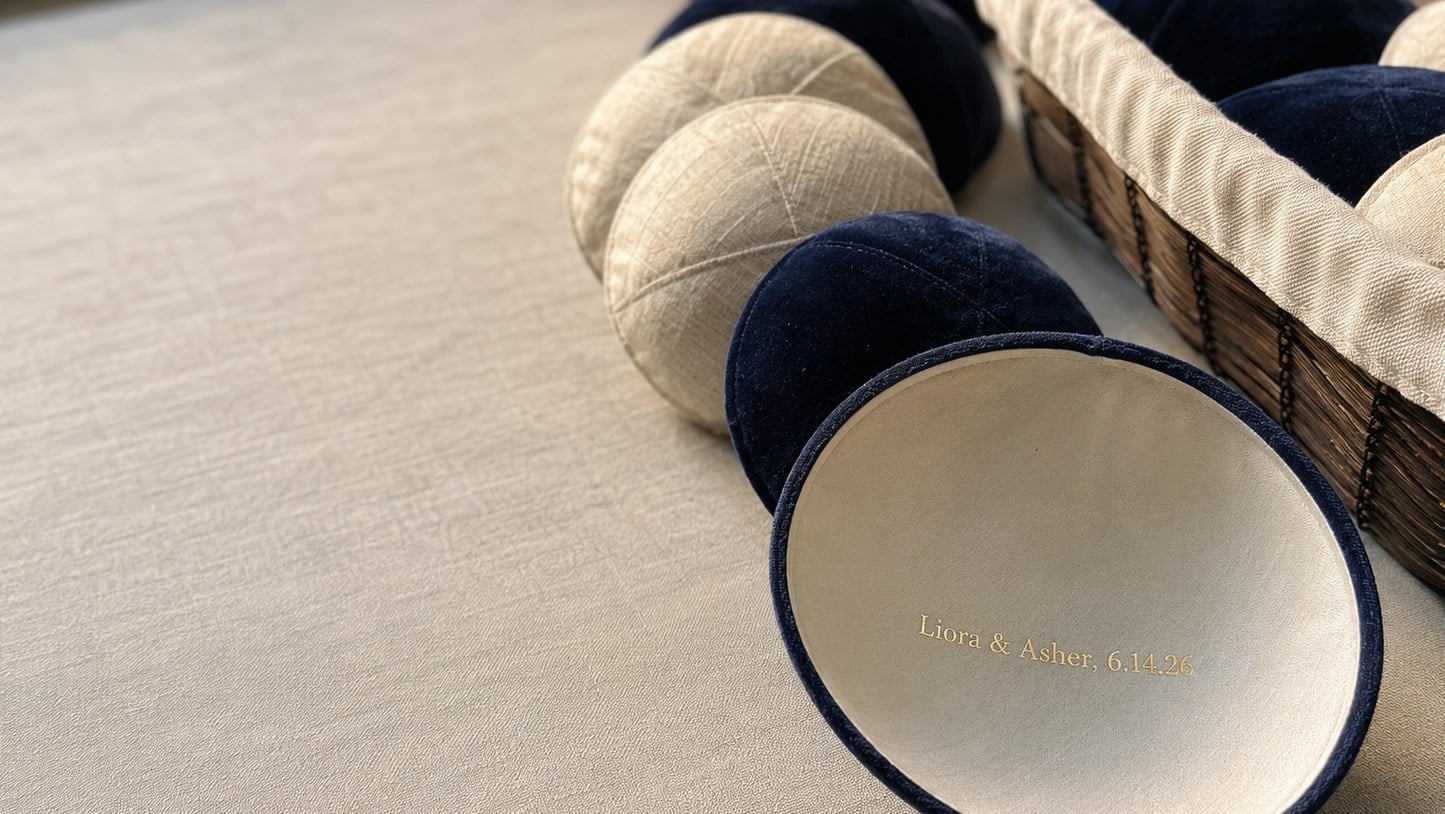
Linen and raw silk kippahs for every kind of celebration.
Summer garden weddings
Linen kippahs match the relaxed feel of an outdoor chuppah, a garden reception or a vineyard ceremony held on a warm afternoon.
Black-tie evening weddings
Raw silk kippahs sit comfortably next to tuxedos and formal suits, catching a little light under ballroom and hall lighting.
Beach and destination simchas
Linen keeps the look easy for seaside ceremonies and destination weddings where guests arrive in light suits and open collars.
Formal bar mitzvah services
Raw silk kippahs give the bar mitzvah boy, his family and the honored guests a polished look on the bimah and in photos.
Daytime brit milah and kiddush
Linen kippahs suit a morning brit milah, a Shabbat kiddush or a family brunch where the dress code is neat but not formal.
Wedding party and family sets
Couples order raw silk for the groom, fathers and grandfathers and linen for guests, with the same names and date inside both.
Custom kippahs styles you can order.
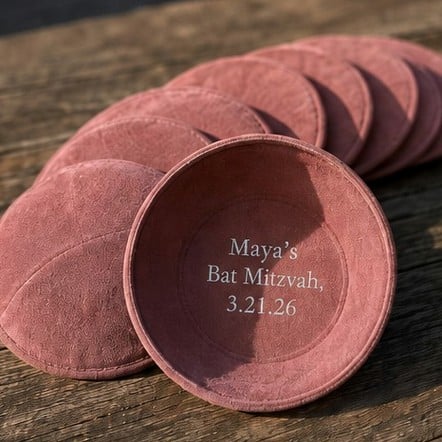 Suede Kippahs
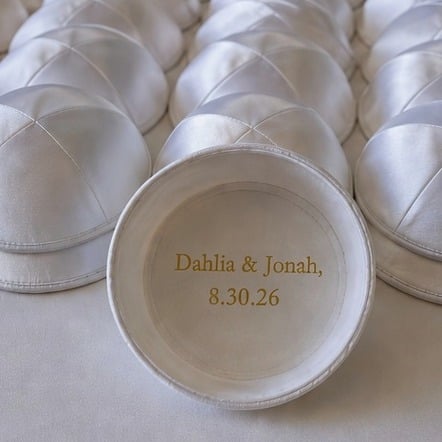 Satin Kippahs
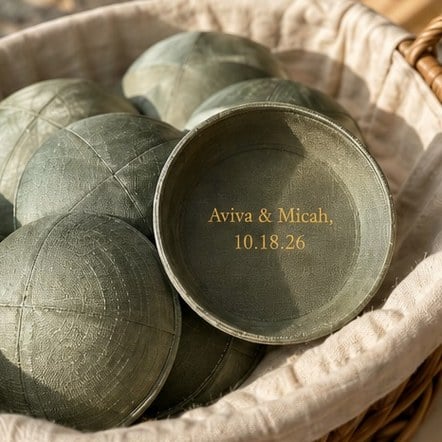 Raw Silk Kippahs | Custom Printed in Bulk — Get Custom Kippahs
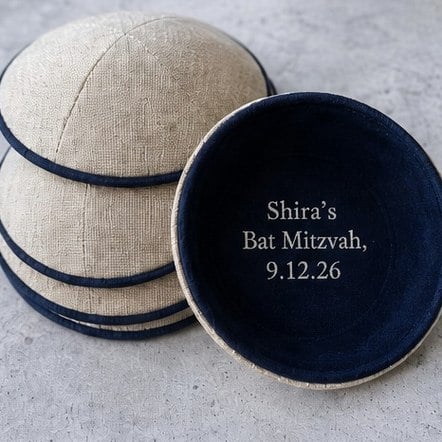 Linen Kippahs | Custom Printed in Bulk — Get Custom Kippahs
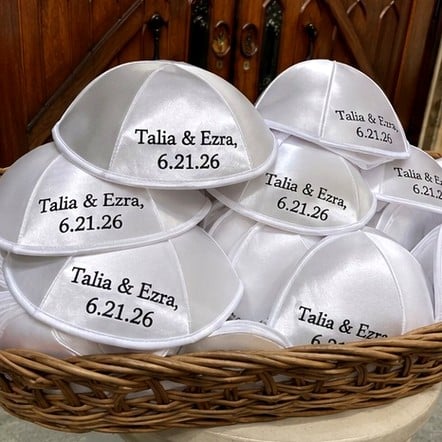 Custom printed kippahs in bulk
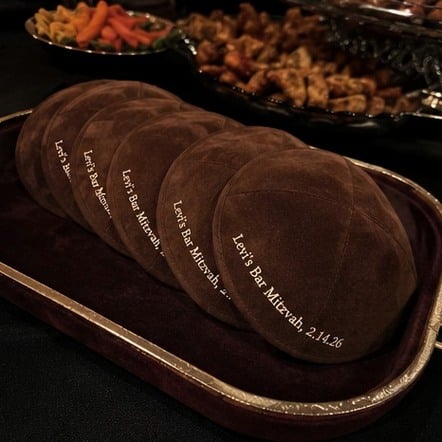 Branded kippahs with logo
A kippah that matches the feel of the day.
Get Custom Kippahs helps you pick the material that fits your venue, season and dress code, then shows you a free mockup before anything is made. Tell us about the event, and we will recommend linen, raw silk or a mix of both.
- Honest material advice for your venue and season
- Linen and raw silk in one order if you need both
- No charge until you approve the mockup
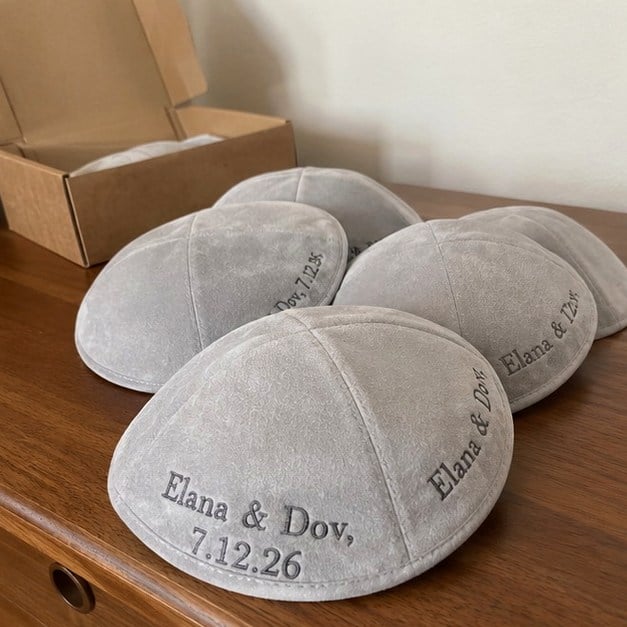
Linen and raw silk kippahs made to order.
Styles
Linen in natural, light and earthy shades for relaxed events, and raw silk in ivory, white and deeper tones for formal ones.
Branding
Couple names, a Hebrew or English date, a family crest or an organization logo imprinted on the lining inside each kippah.
Quantities
Orders start at 12 kippahs, and one order can split between linen and raw silk for different groups of guests.
Timing
A free mockup arrives within 24 hours and standard production takes about 2 weeks, with faster delivery available through express shipping.
What is the difference between linen and raw silk kippahs?
Linen kippahs and raw silk kippahs are both natural-fiber kippahs with visible texture, but they create a different mood. Linen has a dry, matte surface with a slightly rustic weave that reads casual and summery. Raw silk has an irregular, nubby texture with a soft natural luster that reads dressier and more formal.
That difference matters more than most buyers expect. A kippah is one of the few items every male guest wears at the same moment, so the material sets the tone in the chuppah photos and around the reception tables. Get Custom Kippahs offers both on dedicated pages, linen kippahs and raw silk kippahs, and this comparison is meant to help you choose between them for a specific event.
| Factor | Linen kippahs | Raw silk kippahs |
|---|---|---|
| Surface | Matte, dry hand, visible weave | Nubby texture with a soft sheen |
| Mood | Relaxed, natural, summery | Elegant, formal, refined |
| Best events | Garden, beach and daytime simchas | Evening weddings and formal services |
| Pairs with | Light suits, open collars, linen shirts | Dark suits, tuxedos, formal wear |
| Care | Light spot clean, may wrinkle | Light spot clean, avoid water rings |
| Imprint inside | Names, dates or logo on the lining | Names, dates or logo on the lining |
Which is better for a summer or outdoor wedding, linen or raw silk kippahs?
Linen kippahs are usually the better choice for a summer or outdoor wedding. Linen looks at home in the sun, pairs naturally with light suits and open-collar shirts, and keeps the look easygoing for a garden, beach or vineyard ceremony. Its matte surface also photographs cleanly in bright daylight without glare.
Raw silk can still work outdoors when the wedding is formal, such as an evening ceremony on a terrace or a black-tie event at an estate. If the invitation says formal attire, the dressier finish of raw silk will look more in step with what guests are wearing.
A useful test: picture the groom’s outfit. If he is wearing a linen or light-colored suit, choose linen kippahs. If he is wearing a dark suit or tuxedo, raw silk kippahs will sit more naturally with it. When you send your date and venue to Get Custom Kippahs, include a line about the dress code and we will recommend the material that fits.
Do raw silk kippahs look more formal than linen kippahs?
Yes, raw silk kippahs generally look more formal than linen kippahs. The natural luster in raw silk picks up ballroom lighting and candlelight, and the slubbed texture gives the kippah depth without looking shiny the way satin can. Linen, by contrast, stays matte under any light and reads as relaxed.
Formality is not the same as quality, though. A well-made linen kippah looks intentional and refined at a relaxed event, while a raw silk kippah can feel overdressed at a backyard brunch. Match the material to the event rather than assuming the dressier option is always the safer one.
- Choose raw silk for evening weddings, formal bar mitzvah services, black-tie dinners and family heirloom sets.
- Choose linen for daytime weddings, outdoor ceremonies, a brit milah, a kiddush or a summer aufruf.
- Consider both when the wedding party dresses formally but guests are told to dress for the weather.
How do linen and raw silk kippahs compare for comfort and wear?
Linen kippahs feel light and cool, which guests appreciate during a long ceremony on a warm day. Raw silk kippahs feel smooth with a slightly crisp body, and they hold their shape neatly through an evening of dancing and photos. Both are comfortable for a single event and both are lightweight enough that guests forget they are wearing them.
Neither material is the right pick for kippahs worn every day by students or regular minyan attendees. For daily wear, knit and suede hold up better, which is why schools and shuls often choose them; the satin vs. suede vs. knit comparison covers those options. Linen and raw silk are event and keepsake materials, chosen for how they look on the day and how they feel in a guest’s hand when they take one from the basket.
If you expect guests to keep the kippah afterward, raw silk tends to feel more like a keepsake, while linen feels like a natural part of a relaxed celebration.
How do linen and raw silk kippahs hold up after the event?
Both linen and raw silk kippahs need gentle care, and both do best with light spot cleaning rather than washing. Linen tends to wrinkle and can soften with handling, which many people like because it looks lived-in. Raw silk is more sensitive to water rings and should be kept away from damp hands and spilled drinks.
For storage, nest the kippahs together in a drawer or box so they keep their shape, and avoid heavy stacks on top of raw silk. Steam held at a distance relaxes creases in either material without soaking the lining. The full routine for each fabric is in the guide on how to care for custom kippahs.
If you plan to save leftover kippahs for a later family simcha, raw silk usually ages more gracefully in a drawer, while linen is the better fit if you expect guests to wear them again casually in the summer months.
How does the imprint look inside linen and raw silk kippahs?
Personalization on both linen and raw silk kippahs is imprinted on the lining inside the kippah, so the imprint reads the same no matter which outer material you pick. Couple names, a Hebrew or English date, a family crest or a short blessing all work on either style, and the wording can change from kippah to kippah within one run.
The outer fabric does change how the whole kippah feels when a guest turns it over. Gold or silver foil inside a raw silk kippah looks especially formal, while a softer foil color can feel more natural inside linen. Get Custom Kippahs shows the exact lining color, foil color and wording on the free mockup within 24 hours, so you can compare before you approve anything. For artwork tips, see the guide to custom kippah artwork.
Can one order include both linen and raw silk kippahs?
Yes, one order can include both linen and raw silk kippahs, and many families do exactly that. A common split is raw silk for the groom, the fathers, grandfathers and the wedding party, and linen for the guests. The same names and date can go inside both materials so the set still feels like one design.
- Tell Get Custom Kippahs the event date, venue and dress code.
- Choose how many kippahs you want in each material, keeping each style at the minimum of 12.
- Send the wording or artwork for the imprint inside.
- Review the free mockup within 24 hours and request any changes.
- Approve the design, and standard production finishes in about 2 weeks.
Not sure how many to put in each group? The guide on how many kippahs to order for a wedding walks through guest counts and spares. When you are ready, request a custom quote and mention that you want both materials.
Verdict: should you order linen or raw silk kippahs?
Order linen kippahs for daytime, outdoor and warm-weather simchas where the dress code is relaxed. Order raw silk kippahs for evening weddings, formal services and any set meant to become a keepsake. When the wedding party and guests dress differently, order both and keep the same imprint inside.
Price follows the material, the quantity and the imprint, so the clearest way to compare is to ask for both options on one quote. Get Custom Kippahs sends a free mockup within 24 hours, offers unlimited free revisions and charges nothing until you approve the design. You can also browse the full range on the custom kippahs page or read how it works before you start.
From your logo to delivered kippahs in four steps.
Send your artwork
Upload your logo or describe the idea and tell us the quantity you have in mind.
Get a free mockup
A designer returns a mockup of your kippahs with the artwork in place. Unlimited free revisions.
Approve the design
Nothing is produced until you approve the mockup, and you pay nothing before that.
Receive your order
Standard production is about two weeks after approval; faster turnaround is available with express shipping.
Custom kippahs for linen and raw silk kippah buyers, answered.
Are linen kippahs too casual for a wedding?
Linen kippahs are not too casual for a wedding when the celebration itself is relaxed, such as a garden, beach or daytime ceremony. Linen pairs naturally with light suits and summer dress codes. For a black-tie or evening wedding, raw silk usually fits better. Get Custom Kippahs can recommend the right material once you share the venue and dress code.
Does raw silk look shiny like satin?
Raw silk kippahs have a soft natural luster, but they are far less shiny than satin. The irregular, nubby texture of raw silk breaks up the light, so the kippah looks rich and dressy without a glossy surface. Couples who find satin too bright often choose raw silk for a formal wedding or evening bar mitzvah.
Which kippah material photographs better at an outdoor ceremony?
Linen kippahs usually photograph better at an outdoor daytime ceremony because their matte surface does not create glare in bright sun. Raw silk looks lovely in photos too, especially in softer evening light or indoors. If your photographer shoots mostly outdoors at midday, linen is the safer choice for clean, even-looking kippahs in the pictures.
Can I match linen kippahs to a summer wedding color palette?
Linen kippahs come in natural, light and earthy shades that suit most summer wedding palettes, from sand and ivory to soft greens and blues. Send your colors with the quote request, and Get Custom Kippahs will suggest the closest linen shades and show them on the free mockup within 24 hours, so you can compare before approving.
Are raw silk kippahs a good choice for a bar mitzvah?
Raw silk kippahs are a strong choice for a formal bar mitzvah service, especially for the bar mitzvah boy, his father and the honored guests on the bimah. The dressy finish looks polished in family photos and makes a good keepsake. For a casual daytime party afterward, some families add a second set in linen or knit.
Do linen kippahs wrinkle easily?
Linen kippahs do wrinkle more easily than suede or knit, which is part of linen's natural character. Light creases from shipping often relax once the kippahs are unpacked and nested together. Steam held at a distance also helps. If a crisp, smooth look matters for your event, raw silk holds its shape a little more neatly.
Can the groom wear raw silk while guests wear linen kippahs?
The groom can wear a raw silk kippah while guests wear linen kippahs, and Get Custom Kippahs can handle both in one order. Many couples also give raw silk to fathers, grandfathers and the wedding party. The same couple names and date can be imprinted inside both materials so every kippah still belongs to one coordinated design.
Which lasts longer as a keepsake, linen or raw silk kippahs?
Raw silk kippahs usually last better as a keepsake because they hold their shape and keep their formal look when stored in a drawer or box. Linen kippahs soften and wrinkle with handling, which suits casual reuse more than display. For a family heirloom set, Get Custom Kippahs often suggests raw silk with names and the date inside.
Can Hebrew names be imprinted inside linen or raw silk kippahs?
Hebrew names, English names or both can be imprinted inside linen and raw silk kippahs, along with a Hebrew or English date. The imprint sits on the lining, so it reads clearly on either outer material. Get Custom Kippahs shows the exact lettering on the free mockup, and a Hebrew reader in the family should review the spelling before approval.
Is raw silk a good kippah material for a hot climate?
Raw silk kippahs are wearable in warm weather because they are lightweight, but linen kippahs feel cooler and look more natural in heat. For a midday ceremony in a hot climate, linen is usually the more comfortable choice for guests. Raw silk works well when the event moves indoors or starts in the cooler evening hours.
Should a kiddush or brit milah use linen or raw silk kippahs?
Linen kippahs are usually the better fit for a kiddush or brit milah, since both are typically daytime gatherings with a neat but relaxed dress code. Linen looks easy and natural next to everyday Shabbat clothes. Families who want a more formal keepsake for the grandfathers or the sandek sometimes add a few raw silk kippahs to the order.
Can I see linen and raw silk kippah options side by side before ordering?
Get Custom Kippahs can prepare a free mockup for linen and raw silk kippahs side by side within 24 hours, showing the outer color, lining and imprint for each. Ask for both in the quote request. You can request unlimited free revisions and pay nothing until you approve the design, so comparing both materials carries no risk.
What affects the cost of linen versus raw silk kippahs?
The cost of linen and raw silk kippahs depends on the material, the quantity, the imprint and the delivery timing. Raw silk and linen are priced as separate styles, so the clearest comparison comes from requesting both on one quote. Get Custom Kippahs returns a quote with a free mockup, and nothing is charged until you approve.
Are linen and raw silk kippahs suitable for daily wear?
Linen and raw silk kippahs are best suited to events and keepsakes rather than daily wear. Both need gentle handling and light spot cleaning, so they are not ideal for students or regular minyan use. For everyday kippahs, Get Custom Kippahs usually recommends knit or suede, which tolerate frequent wear and handling much better.
What should I include when asking for a linen or raw silk kippah quote?
A linen or raw silk kippah quote request should include the event date, the venue or season, the dress code, the quantity of each material and the wording or logo for the imprint inside. Mention preferred colors too. With those details, Get Custom Kippahs can recommend a material and send a free mockup within 24 hours.
Can leftover raw silk or linen kippahs be used at a later family event?
Leftover raw silk or linen kippahs can be used at a later family event, especially if the imprint shows the family name rather than a specific date. Raw silk keeps its formal look in storage, while linen suits casual summer reuse. Store either material nested in a dry drawer, away from heavy stacks and damp spots.
Ready to see your kippahs with your logo?
Free mockup within 24 hours. Minimum order 12. Standard turnaround about 2 weeks, faster available. You pay nothing until you approve the design.
Win Free Stuff
Enter below for a chance to win plus receive 10% off your first order.
🎉 You are in!
We will text you your 10% off code. Good luck!
