How to Care for Custom Kippahs: Cleaning, Storage and Long-Term Wear
Custom kippahs stay crisp longest when you spot clean instead of soaking, store them flat or gently stacked, keep foil imprints away from heat and pick a material that matches how often they will be worn. This guide from Get Custom Kippahs covers care for satin, suede, knit, velvet, leather, linen and raw silk kippahs, from the event table to years in a drawer.

- Spot clean custom kippahs with a damp cloth; avoid soaking and the dryer.
- Store kippahs flat or nested in a box, away from direct sun and heat.
- Knit and crochet kippahs handle daily wear best; satin suits single events.
- Foil imprints inside the lining should never be ironed directly.
- Get Custom Kippahs orders start at 12 pieces with a free mockup in 24 hours.
How do you clean a custom kippah without ruining it?
The safest way to clean custom kippahs is spot cleaning: a soft cloth, cool water and a drop of mild soap, dabbed on the stain rather than rubbed. Soaking, machine washing and tumble drying are the usual causes of a warped crown, a frayed edge or a lifted imprint, so keep those for nothing more delicate than a sturdy knit.
Work from the outside of the stain toward the center so you do not spread it, then blot with a dry cloth and let the kippah air dry on a rounded surface such as a small bowl turned upside down. Drying on a curve helps the kippah keep its dome instead of flattening into a disc.
- Blot fresh spills right away with a dry cloth.
- Dampen a second cloth with cool water and a little mild soap.
- Dab, do not scrub, especially near the edge and the lining.
- Rinse by dabbing with a clean damp cloth.
- Air dry on a rounded form, away from radiators and direct sun.
Which kippah materials are easiest to care for?
Knit and crochet kippahs are the easiest custom kippahs to look after, followed by suede and linen, while satin, velvet and raw silk need the gentlest handling. If the kippahs will be worn every week or every day, care should be part of the material choice, not an afterthought.
| Material | Cleaning | Main care risk | Best fit |
|---|---|---|---|
| Satin | Light spot clean only | Water marks and creasing | Weddings and single events |
| Suede | Dry brush, minimal water | Water spots, flattened nap | Bar mitzvahs, synagogue use |
| Knit and crochet | Gentle hand wash | Stretching if wrung out | Daily wear, schools |
| Velvet | Dry brush, spot clean | Crushed pile | High holidays, formal events |
| Leather | Wipe with a barely damp cloth | Drying out near heat | Keepsakes, executive gifts |
| Linen and raw silk | Light spot clean | Wrinkles and water rings | Summer simchas, elegant favors |
You can compare the look of each option on the satin, suede and knit and crochet pages before you request a quote.
How should you store custom kippahs between events?
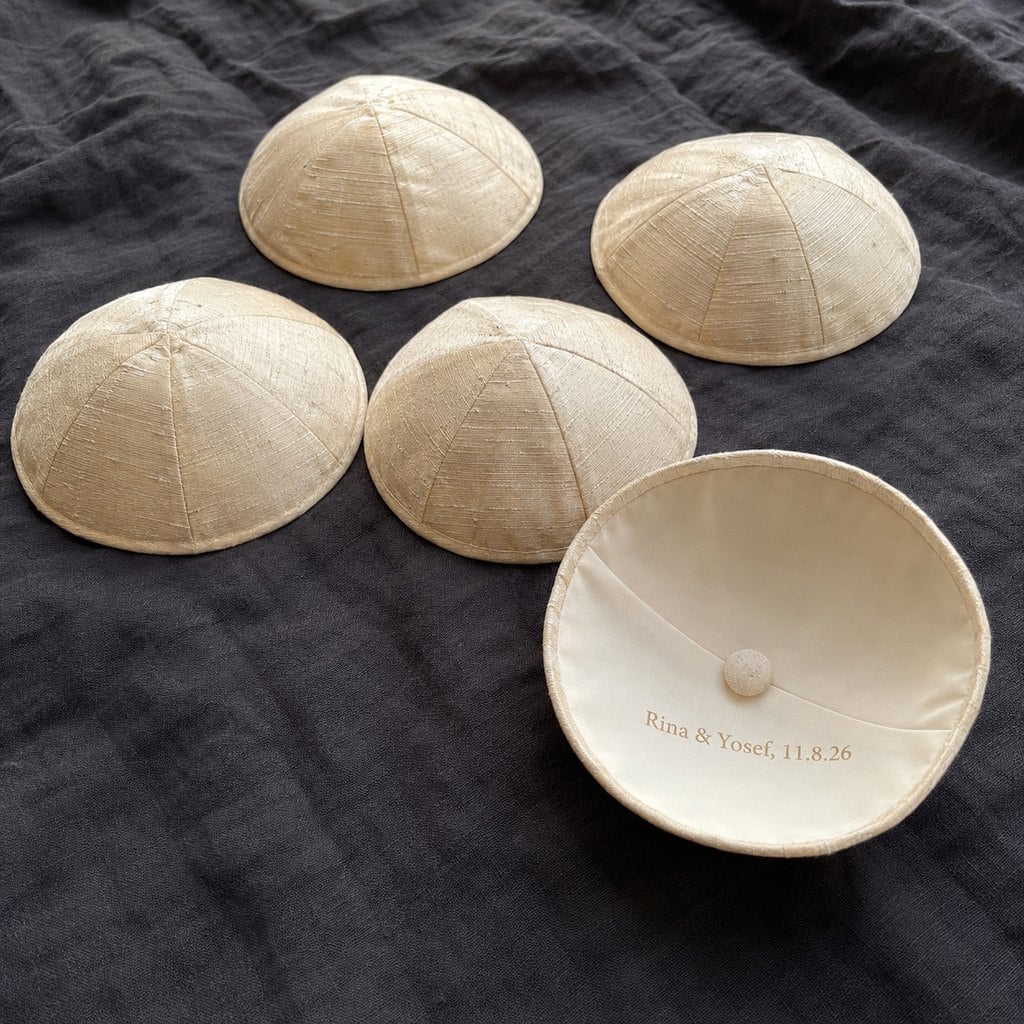
Store custom kippahs flat or nested inside each other in a box, in a cool, dry place out of direct sunlight. Nesting kippahs of the same size keeps the domes supported, so they come out of storage with their shape instead of a sharp fold down the middle.
Synagogues and schools that keep a shared supply should give kippahs a dedicated bin or drawer rather than a basket where they get crushed under siddurim. A breathable cotton bag or a lidded cardboard box works better than a sealed plastic bag, which can trap moisture and leave fabric smelling stale.
- Satin and raw silk: nest them and avoid heavy stacks on top.
- Suede and velvet: keep them nap side up and do not press them flat under weight.
- Leather: keep away from heaters and sunny windowsills so the hide does not stiffen.
- Knit: fold-safe, but store dry to avoid mildew in the yarn.
A family simcha kippah kept as a memento lasts best in its own small box with a label noting the date and occasion.
Can you iron or steam a kippah with a foil imprint?
Never iron directly over the foil imprint inside custom kippahs. Heat can soften the foil, dull its shine or cause it to stick to the iron. Steam held at a distance is the gentler choice for relaxing creases in satin, linen and raw silk, as long as the lining stays dry.
If you must use an iron on a satin or linen kippah, set it low, turn the kippah so the outer fabric faces up, place a thin pressing cloth between the iron and the fabric, and keep the iron moving. Skip the iron entirely on suede, velvet and leather; steam from a kettle or a hanging garment steamer, followed by a soft brush, is enough to lift a crushed nap.
Most creases on new kippahs come from shipping and settle out within a short time of being unpacked and nested. Give them a chance before reaching for heat.
Which custom kippahs hold up best to daily wear?
For daily wear, knit and crochet kippahs hold up best because the yarn flexes, resists creasing and tolerates gentle washing. Suede is a strong second for weekly synagogue use. Satin, velvet and raw silk look their best when they are worn for a single occasion and then stored.
That is why schools often choose differently from wedding hosts. A yeshiva that hands kippahs to students for everyday use is better served by knit, while a wedding couple handing out favors to guests can choose satin or raw silk for the look on the day. The custom kippahs for Jewish day schools page covers school orders in more detail.
Clips and pins also affect wear. Snapping a clip through the same spot every day can stretch fabric over time, so moving the clip slightly or using a kippah with a sturdier edge helps a daily kippah last.
How do you keep the imprint inside a kippah readable?
The imprint inside custom kippahs stays readable longest when the lining is kept dry, away from direct heat and not scrubbed. Foil stamping on the lining is durable for normal wear, but rubbing it with a wet cloth or a cleaning product is the fastest way to wear the letters down.
When you design, a few artwork choices help the imprint survive years of wear: clear, medium-weight lettering instead of hairline script, a foil color with good contrast against the lining and a design that sits comfortably inside the crown instead of near the edge, where hands grip the kippah. Get Custom Kippahs sends a free mockup within 24 hours so you can check size, color and placement before anything is produced, with unlimited free revisions.
If you want ideas for wording, the guide on what to imprint inside a kippah lists common names, dates and messages.
What care mistakes shorten a kippah's life?
The most common care mistakes with custom kippahs are machine washing delicate fabrics, drying them flat on a radiator, storing them crushed under books and cleaning the imprint with harsh products. Each one is avoidable with a little planning at the event and afterward.
- Leaving kippahs in a hot car: heat can warp the dome and soften foil.
- Tossing leftovers in a bag: spare kippahs from an event get crushed and creased; box them instead.
- Using bleach or stain removers: these can discolor satin and strip foil.
- Wringing out a wet knit: press water out with a towel so the yarn does not stretch.
- Brushing suede the wrong way: brush gently in one direction to restore the nap.
At a busy wedding or bar mitzvah, a simple basket or tray at the door keeps kippahs from being stuffed into pockets or left on wet tables.
How do you plan a kippah order that will last for years?
To plan custom kippahs that last, match the material to the wear, keep the design simple enough to stay legible, and order a few spares so worn kippahs can be retired without a full reorder. Synagogues and schools often reorder the same approved design later, which keeps a long-running supply consistent.
Orders at Get Custom Kippahs start at 12 pieces. You pay nothing until you approve the design, and standard turnaround is about 2 weeks after approval, with faster turnaround available through express shipping. Read how it works for the full process, then request a custom quote with the material, colors, quantity and event date you have in mind.
Frequently asked questions
Can satin kippahs be put in the washing machine?
Satin kippahs should not go in the washing machine. The agitation can crease the fabric, fray the edge and loosen the lining, and water can leave rings on the shiny surface. Get Custom Kippahs recommends spot cleaning satin with a soft cloth, cool water and a drop of mild soap, then air drying the kippah on a rounded form so the dome keeps its shape.
How do I remove a water spot from a suede kippah?
A suede kippah with a water spot usually recovers if you let it dry naturally at room temperature and then brush the nap gently in one direction with a soft brush. Avoid hair dryers and radiators, which can stiffen suede. For a stubborn ring, lightly dampen the whole panel evenly and let it dry again so the color evens out.
Are knit kippahs safe to hand wash?
Knit and crochet kippahs are the most washable custom kippahs. Hand wash them in cool water with a little mild detergent, then press out the water with a towel instead of wringing, which can stretch the yarn. Reshape the kippah while damp and let it air dry on a rounded surface. A tight stitch keeps its shape through repeated gentle washing.
How should a synagogue store a shared supply of kippahs?
A synagogue's shared supply of kippahs lasts longest in a dedicated bin or drawer where the kippahs are nested by size rather than piled loosely in a basket. A lidded box or breathable cotton bag keeps dust off without trapping moisture. Get Custom Kippahs suggests keeping the shul's supply away from heaters, sunny windows and stacks of heavy books.
Will the foil imprint inside a kippah fade over time?
The foil imprint inside custom kippahs holds up well to normal wear when the lining stays dry and is not scrubbed. Fading usually comes from heat, cleaning products or repeated rubbing with a wet cloth. Choosing clear, medium-weight lettering and a high-contrast foil color at the mockup stage also helps the names and dates stay readable for years.
How do I get creases out of a new linen kippah?
Creases in a new linen kippah usually come from shipping and often relax once the kippahs are unpacked and nested. For firmer creases, hold a garment steamer a short distance from the outer fabric while keeping the lining dry. If you use an iron, set it low, use a pressing cloth and never press directly over the imprint.
What is the best way to clean a leather kippah?
A leather kippah should be wiped with a soft cloth that is barely damp, then left to dry at room temperature, away from direct heat. Avoid soaking leather or using household cleaners, which can stain or dry out the hide. Get Custom Kippahs recommends storing leather kippahs in a cool spot so the material stays supple.
How can I restore the pile on a crushed velvet kippah?
A crushed velvet kippah can usually be revived with gentle steam held a short distance from the fabric, followed by a soft brush in the direction of the pile. Never press velvet flat with an iron, which sets the crush in place. Storing velvet kippahs nested rather than stacked under weight prevents the problem in the first place.
Which kippah material is best for a family heirloom?
For a family heirloom, leather, velvet and raw silk kippahs are popular because they feel substantial and look formal in photos and keepsake boxes. Each one needs dry, cool storage away from sunlight to keep its color. Get Custom Kippahs can imprint names and the Hebrew date inside the lining so the kippah records the occasion for future generations.
How often should a school replace students' daily kippahs?
Students' daily kippahs need replacing when the edge frays, the dome loses its shape or the imprint becomes hard to read, and the timing varies with how they are worn and stored. Knit kippahs usually outlast satin for everyday use. Schools that keep their approved design on file with Get Custom Kippahs can reorder matching kippahs whenever stock runs low.
Can kippahs left over from a wedding be reused later?
Leftover wedding kippahs can be reused for anniversaries, a brit milah or Shabbat guests if they are stored well after the event. Gather them at the end of the night, nest them in a lidded box and keep them cool and dry. Kippahs imprinted with the couple's names and wedding date become a meaningful family supply.
Should spare kippahs be ordered to replace worn ones?
Ordering a few spare kippahs is a practical way to replace stained or worn pieces without placing a full new order right away. Synagogues, schools and families with regular guests find spares especially useful. Get Custom Kippahs orders start at 12 pieces, and a saved design makes it simple to match colors and imprint on any later reorder.
Get a free mockup for your kippahs
Send your logo or idea and the quantity you have in mind. Get Custom Kippahs returns a free mockup within 24 hours, you approve the design before anything is produced, and standard turnaround is about two weeks with faster options available. Get a custom quote.